
Devastating bushfires in Australia, and internationally, over recent years have left communities reeling, serving as a stark reminder of the ever-present threat across much of Victoria. While the focus is often on evacuation plans, a critical Australian Standard, AS 3959:2018, governs how we build our homes in these vulnerable areas. It’s not just red tape; it’s a life-saving blueprint designed for the moment you can’t leave. This article outlines how Surf Coast BAL Reports plays an important role in keeping you and your family safe in the event of a major bushfire, or grassfire, in your area.
When Leaving is No Longer an Option: Shelter in Place
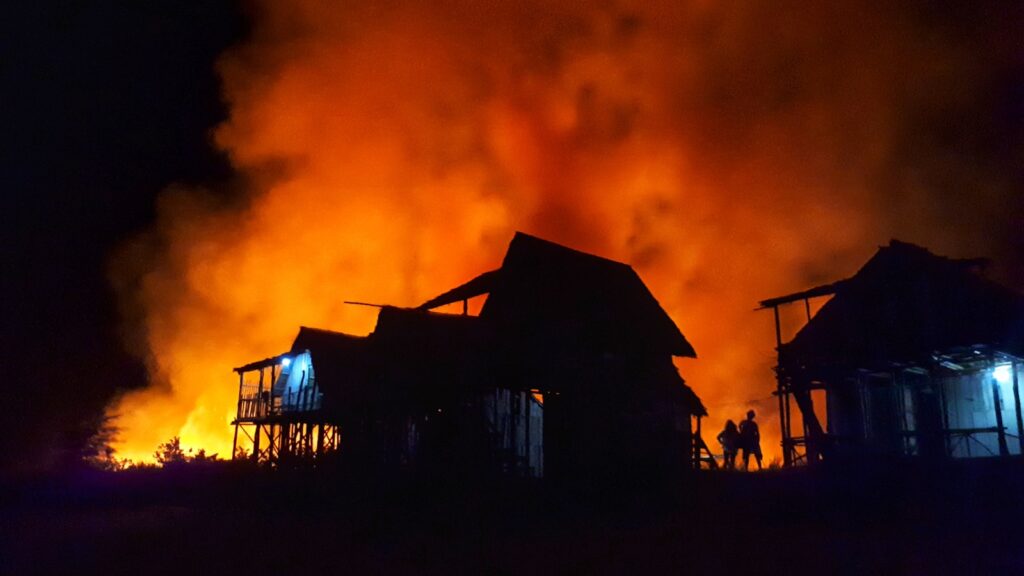
Imagine the scene: smoke chokes the sky, turning day to a terrifying orange twilight. The roar of an approaching fire is getting louder, and the CFA alerts on your phone are blunt: “It is too late to leave. Seek shelter now.” This is the harrowing reality of a “Shelter in Place” scenario.
For you and your family, this means your home suddenly becomes your fortress. Evacuation is off the table; the roads are treacherous, and the fire front is moving too fast. For the next crucial minutes, as the intense, radiant heat and burning embers of the fire front wash over your property, your house is your only protection. This is the moment when you are most at risk. The very design and materials of your home are what will stand between you and the inferno outside. The goal of AS 3959 is to ensure your home has the best possible chance of withstanding this assault, protecting you until the front passes and the immediate danger subsides.
The BAL Rating: Your Home’s Armour Level
So, how do you know if your home is up to the task? This is where the Bushfire Attack Level (BAL) rating comes in. If you’re building a new home, renovating, or extending in a designated bushfire-prone area in Victoria, a BAL assessment is mandatory. It’s not just a bureaucratic hoop to jump through; it’s a scientific evaluation of your property’s specific risk.
A qualified assessor will analyse three key factors:
- The Fire Danger Index (FDI): A measure of the fire risk on a given day, with AS 3959 assuming a severe to extreme fire danger level.
- The surrounding vegetation: Different types of vegetation burn with different intensities. A dense forest poses a higher risk than managed grassland.
- The slope of the land: Fire travels much faster uphill. The steeper the slope, the higher the risk.
Based on this assessment, your property is assigned a BAL rating, from BAL-12.5 (lower risk involving ember attack and lower levels of radiant heat) up to BAL-FZ (Flame Zone involving extreme radiant heat), where the home is expected to be directly exposed to flames.
This rating dictates the specific construction requirements for your home. For example, a home with a high BAL rating might require toughened glass windows, non-combustible cladding like fibre cement sheeting, metal shutters, and fine steel mesh screens over all openings to stop embers from getting in. These aren’t just cosmetic additions. They are layers of armour specifically designed to resist the three main ways a house is destroyed in a bushfire: radiant heat, ember attack, and direct flame contact. While the Australian BAL Rating and construction standards do not, and cannot, guarantee a house will survive, they do aim to appropriately mitigate the risk. By enforcing these tailored construction standards, the BAL rating gives you more confidence that your home is built to defend you when you need it most.
Preparing for the Unthinkable: Designing for the Worst Day
It’s easy to become complacent. We might go through several summers with minimal fire activity and begin to question the need for such stringent building rules. However, AS 3959 is intentionally designed for the worst-case scenario.
The standard doesn’t plan for a typical summer day; it plans for the rare, catastrophic event. It assumes extreme weather conditions, high fuel loads, and a fire of terrifying intensity—the kind of fire that might only occur once in a generation but has the potential to cause unimaginable destruction. Think of the conditions during the Black Saturday fires in 2009; that is the level of threat AS 3959 prepares your home for.
By building to this high standard, you are ensuring that your home is not only prepared for a grass fire, but is also well prepared for the kind of extreme bushfire event that history has shown is tragically possible in Victoria. It’s a long-term investment in your family’s safety, providing peace of mind that if the day comes when you must shelter in place, your home gives you the best possible chance of survival.